

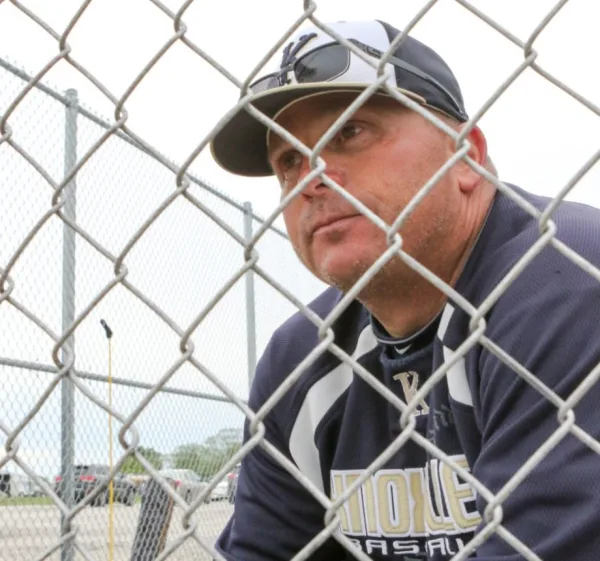
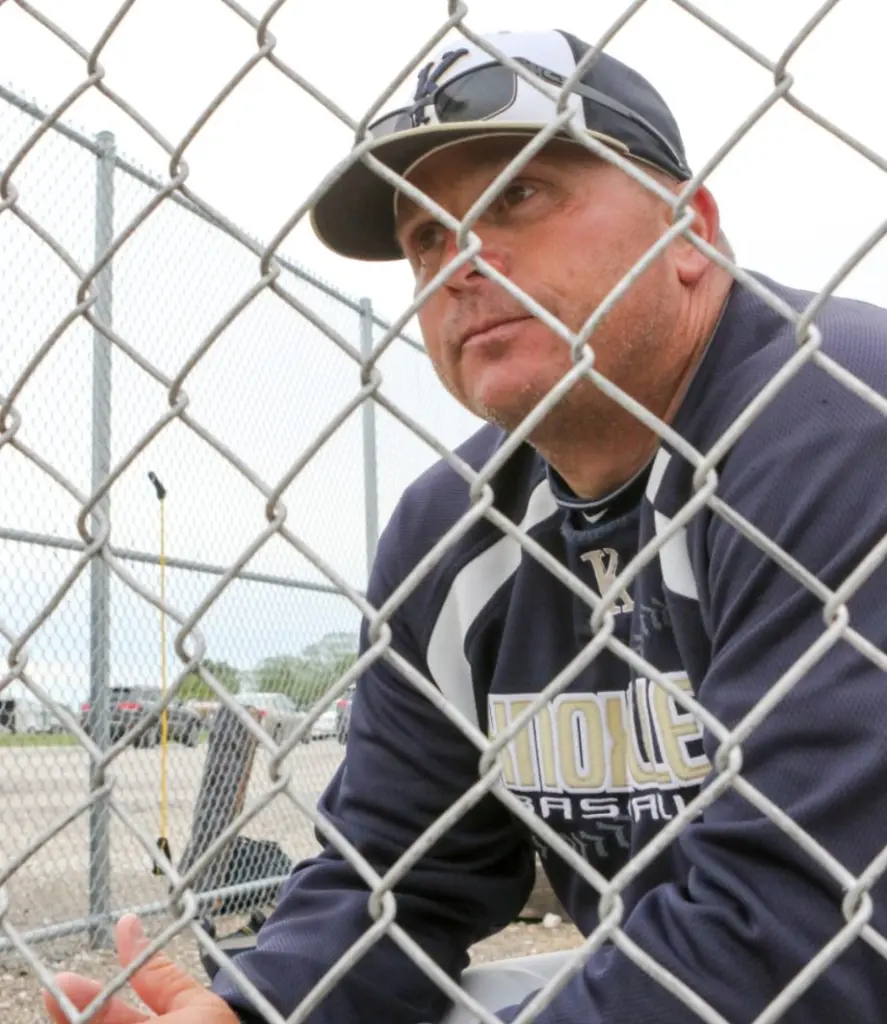
Rick E. “Ricky” Reed, a Knoxville High School standout athlete who became a beloved longtime coach remembered for his straightforward honesty, unwavering passion, and ability to get the best out of every player died Jan. 3, 2026, at age 54 after a courageous battle with kidney cancer.
Friends and colleagues say Reed led by example, treated everyone equally, and earned deep respect in the community.
“He was honest with everybody, but he always did what was right,” said Chad Clevenger, a Knoxville teacher, former coach, and close friend. “Right was right, wrong was wrong. He was willing to help anybody and everybody out with anything. He led by example.”
Blue Bullet through and through

Reed graduated from Knoxville in 1990, excelling in football and baseball. He returned to coach the Blue Bullets, spending five years as assistant girls’ basketball coach and 12 years as varsity boys’ baseball coach. He also assisted at Carl Sandburg College, served on the Knoxville Youth League board, and maintained district facilities — taking special pride in keeping the baseball diamond in top shape.
Matt Gibson, a 1991 Knoxville graduate and lifelong friend, first knew Reed as a teammate on a talented 1989-90 basketball team.
“He was used to being the star on the football or the baseball team, but, you know, he was a role player,” Gibson recalled. “He was maybe the 6th, 7th, 8th man. But he accepted his role very well and we were friends.”
Obituary: Rick Reed ~ March 21, 1971 – January 3, 2026
Their friendship grew stronger through coaching. When Gibson was head girls’ basketball coach, he recruited Reed as an assistant.
“Probably one of the best assistants I’ve had — very loyal and very knowledgeable,” Gibson said. “We spent a lot of time together scouting and going out to eat. I couldn’t ask for a better friend and a better guy to coach with. We became real close — probably even closer friends as we coached together.”
Gibson described Reed as “the good cop type of guy” who was passionate and vocal, but knew his place as an assistant.
When Reed considered the varsity baseball job, Gibson encouraged him.
“I remember the day he asked, ‘What do you think about me applying for the varsity baseball job?’” Gibson said. “I said, ‘Do it. You’re ready.’”
As head coach, Reed excelled as a communicator who never missed a practice and gave 110%.
“First of all, Rick liked to talk, so he was a talker,” Gibson said. “But he always relayed to the kids what he wanted them to do. He was 110% into it. He bled blue and gold. I couldn’t ask for a better sidekick.”
A passionate approach on and off the field
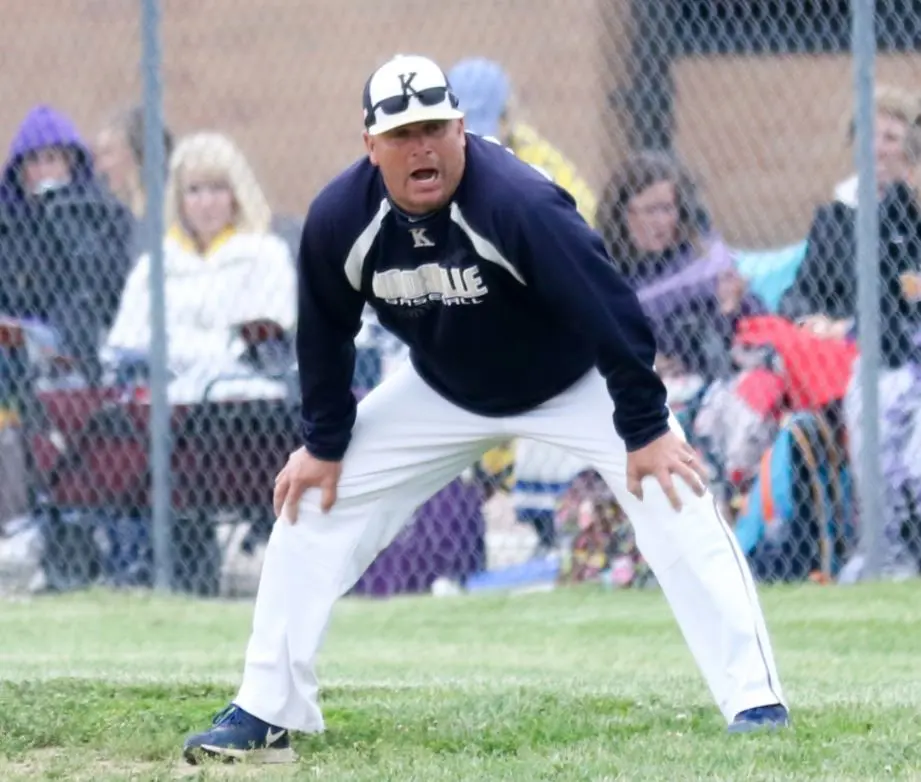
Clevenger described Reed’s demanding yet fair coaching style.
“He expected what he expected and wanted it out of each kid,” Clevenger said. “If he wasn’t getting it, he didn’t give up. There was tough love, but he made sure everybody got better. You’re only as good as your weakest player.”
Players loved Reed’s authenticity.
“He’d jump down your throat, but by the end of the sentence, he’d have his arm around you,” Clevenger said. “He treated the No. 1 player to the No. 20 the same. Kids felt like equals.”
Reed handled parents with the same directness.
“It was his team,” Clevenger said. “He knew the goal and how to get there. That no-BS approach gained respect from athletes and parents.”
Gibson emphasized Reed’s all-in passion.
“Rick was very passionate, whatever he did,” Gibson said. “He threw himself into it 110%, even as an assistant — and I mean, I was an assistant for many years — it’s very hard to do that. He did that. He wanted the best for the kids and it was never about the coaches.”
Facing adversity with strength
In his final years, Reed faced cancer with quiet determination.
“He never talked about it,” Gibson said, choking back tears. “I remember when I found out, I called him. And I said, ‘I don’t know what to say.’ And he said, ‘I know.’ He said, ‘Let’s just carry a conversation on, like we’re coaching or we’re friends.’ And he said he was gonna fight it. And man, did he ever fight it and never complained once. He came at this thing straight on. He fought to the very end.”
When visiting, Gibson said they spent just 5% of the time on the illness and 95% reminiscing about high school, playing, and coaching days — full of laughs and stories.
“As serious as I was and as much tough love as I gave my players, he always, at least once a day, made me laugh and smile,” Gibson said. “He kind of kept things light at times, but he was also serious. He wanted the best for the kids. What a passionate person when it came to life or coaching or whatever he did. He just poured his whole self into it.”
Clevenger co-hosted a podcast series with Reed, starting casually but becoming weekly after his prognosis worsened. The conversations captured Reed’s stories, opinions, laughs, and reflections — preserving his voice for his family.
The final episode, recorded around December 7, was especially difficult.
“It was a hard conversation,” Clevenger recalled. “It was hard questions for me to ask. You can’t see it visually, but it was visually hard for him to talk about it. But unfortunately, it was the reality.”
“He didn’t want sympathy,” Clevenger said. “He kept it quiet. The way he handled everything was mind-blowing.”
Both friends say Reed poured his whole self into coaching, family, and life.
“He was just a great friend, great teammate, great husband, father,” Gibson said.
Reed is survived by his wife, Lisa of Knoxville; three stepchildren and their spouses; five grandsons; siblings and extended family.
Clevenger said Reed hoped to be remembered simply as a hard worker who did the right thing and had good values.
A celebration of life will be held from 10 a.m. to 3 p.m. Saturday, Jan. 17, 2026, at American Legion Post 749 in Knoxville. Memorials may be made to the family.