
Article Summary
- A federal judge has upheld a first-of-its-kind Illinois law that protects consumers and retailers from paying so-called credit card “swipe fees” on taxes and tips.
- The Interchange Fee Prohibition Act was passed in late 2024 and immediately challenged by banks and credit unions.
- Illinois Bankers Association and Illinois Credit Union League announced after the ruling they would file an appeal in coming days.
This summary was written by the reporters and editors who worked on this story.
CHICAGO — A first-in-the-nation law that would prohibit banks and credit card companies from charging swipe fees on tips and taxes survived a major hurdle in court Tuesday, but opponents vow it will not be the last challenge.
Financial institutions including the Illinois Bankers Association and Illinois Credit Union League filed a lawsuit against the Interchange Fee Prohibition Act in late 2024, arguing it would create an overly complex and burdensome payments system for debit and credit card purchases.
However, U.S. District Judge Virginia Kendall upheld the law, creating a tight timeframe for Illinois businesses to set up processes for compliance ahead of the July 1, 2026, deadline. Implementation of the law has already been pushed back by a year to allow time for the legal dispute to be resolved.
The IFPA law was folded into Illinois’ Fiscal Year 2024 budget as an appeasement to retailers to offset losses after the governor and legislators capped an existing tax discount claimed by retailers to fill a budget gap.
The Illinois Retail Merchants Association and the National Restaurant Association cheered the ruling, calling the win a meaningful step that will allow other states to follow in Illinois’ footsteps.
“Today’s ruling is a historic win for Main Street over Wall Street and will save businesses and consumers millions of dollars a year,” Rob Karr, president and CEO of the Illinois Retail Merchants Association said in a statement. “As the first law in the nation to restrict onerous swipe fees, we hope this measure can serve as a model for other states to seek relief for businesses and working families struggling with higher costs.”
The bill faced strong criticism from banks and small business interests with the Illinois Chamber of Commerce, Illinois State Black Chamber of Commerce and Illinois Hispanic Chamber of Commerce, all arguing that the process of separating out the tip and tax portions of fees would be costly for small business owners, limiting payment options and disrupting safe and trusted payment systems.
In her ruling, Kendall acknowledged that it was a “close case” due to the lack of precedent in other states.
What are interchange fees?
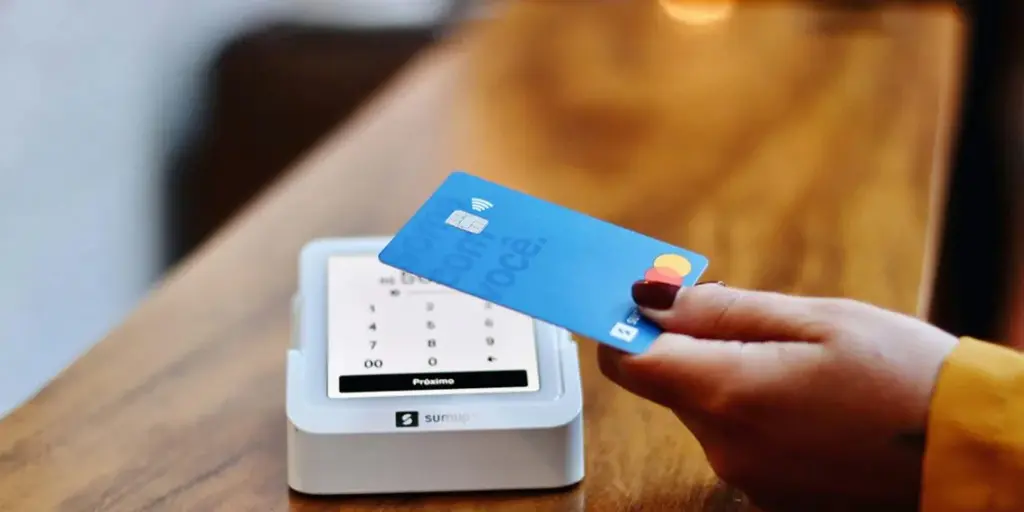
Each time a shopper swipes their credit or debit card, it sets off a complicated network of payments between the consumer’s bank and the retailer’s bank. The retailer’s bank pays an “interchange fee,” typically around 2% of the transaction cost, to the consumer’s bank. Those fees paid by retailers are often passed on to consumers.
Once IFPA goes into effect, retailers will no longer have to pay those fees on the tip and tax portion of the transaction, theoretically shielding customers from paying for them.
However, the banks argue that interchange fees are there for a reason — to compensate financial institutions for bearing the risk of fraud.
During oral arguments in the case, the attorney general’s office argued in favor of IFPA and said the amount of interchange fees banks would be able to collect would only be reduced by about 9 to 10%.
Attorney Charlotte Taylor, representing the Illinois Bankers Association, said 9 to 10% could cut into profit margins significantly.
“Imagine you’re making a 5% profit, which is a reasonable profit margin for a business, then suddenly 10% of that profit is taken away,” Taylor said. “Now you’re operating at a 5% loss.”
Read more: Fate of Illinois’ first-in-the-nation credit card ‘swipe fee’ ban awaits judge’s ruling | Amid court battle, lawmakers look to push back ‘swipe fees’ ban
The Electronic Payments Coalition, a lobbying group representing major financial institutions and payment networks like Visa, Mastercard and American Express as well as credit unions and community banks, issued a statement calling on Illinois legislators to repeal the bill after the judge’s ruling.
The coalition pointed to a study it published in late 2024, finding that “40 of the largest retailers will soak up nearly 40 percent of the estimated $118 million reduction in interchange. The top 10 largest retailers — Amazon, Walmart, Home Depot, Verizon, Apple, AT&T, Costco, CVS, Walgreen and Kroger — will receive 21.4 percent of the savings.”
The rest of the savings, it said, would be split amongst roughly 1.3 million small businesses in Illinois.
Implementation, legal questions
Small business advocates including the Illinois State Black Chamber of Commerce have argued that the law will lead to higher costs and administrative headaches for business owners as they will need to purchase new software and equipment upgrades and devote more time to accounting. They also warn of increased fraud risks and privacy concerns for consumers.
Proponents of IFPA argue that implementation should be simple, as retailers are already prohibited from charging fees on purchases made through government programs such as the Supplemental Nutrition Assistance Program, and because the tip and tax portion of charges is already separated in financial systems.
“There is no doubt that the IFPA presents complicated compliance challenges,” Kendall acknowledged in her ruling, but ultimately ruled that the law requires such compliance, even if it proves “overwhelmingly arduous” for financial institutions.
“These compliance costs, among others, are undeniable,” Kendall wrote. “But State (and federal) laws will always require some kind of compliance cost, no matter who bears it.”
Beyond the cost of implementation, the banks argued that the law violated the Supremacy Clause of the Constitution by preempting the National Bank Act, which establishes the role regulating nationally charted banks as a federal power.
Kendall rejected that argument, though, as interchange fees are set by payment networks, and not banks directly. She did, however, side with the banks on a separate question regarding data sharing restrictions.
IFPA prohibits all involved parties other than retailers from sharing data that exceeds the information necessary to complete the transaction or as required by law. That data sharing statute, Kendall found, is preempted by federal law granting financial institutions broad power to engage in data processing.
Other state legislatures will now likely look to the outcome in Illinois as they consider their own regulations for interchange fees.
The Illinois Bankers Association and Illinois Credit Union League announced after the ruling they would file an appeal in coming days.
“In light of this outcome, we renew our call for state lawmakers to repeal this flawed law before it can do any more harm to the Illinois economy,” the plaintiffs that sued IFPA wrote in a joint statement.
“The fight over IFPA and any similar proposal will continue.”
Capitol News Illinois is a nonprofit, nonpartisan news service that distributes state government coverage to hundreds of news outlets statewide. It is funded primarily by the Illinois Press Foundation and the Robert R. McCormick Foundation.
This article first appeared on Capitol News Illinois and is republished here under a Creative Commons Attribution-NoDerivatives 4.0 International License.