

A woman and her child spent three weeks trying to find a place to live in Galesburg this summer. No shelter would take them, because of the child’s age.
Mayor Peter Schwartzman said she moved into permanent housing Friday. It happened because people raised money — $1,500 in about three days, by his account — to cover what she needed to get there.
“That’s just one family of many,” he said. “She was in a bind because none of the shelters will accept her for that reason. And that’s a loophole, a gap, that we need to fill.”
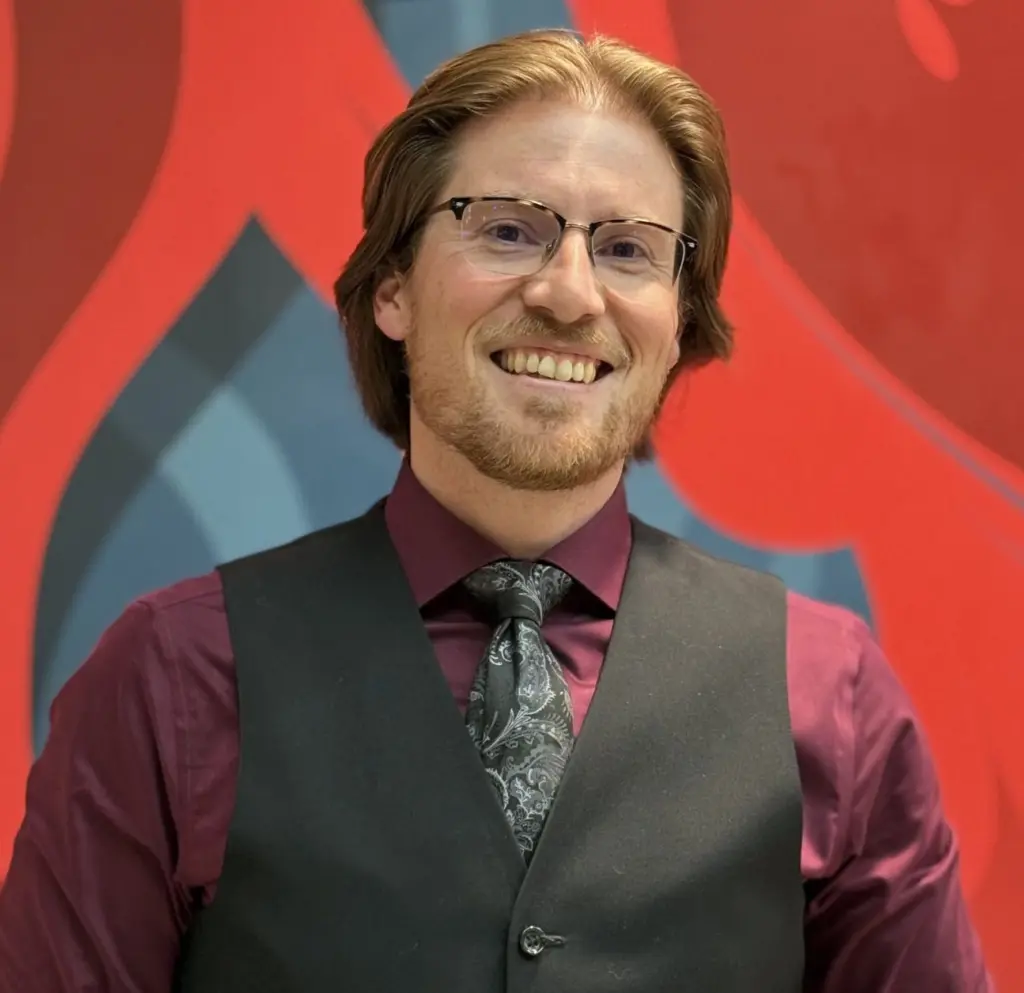
Mayor Peter Schwartzman joined Galesburg’s Morning News on Tuesday, Sept. 8. Listen to the full interview below.

What the city has
Schwartzman said addressing homelessness has been a priority since he took office five years ago, and that the city has more capacity now than it did then.
A shelter the city funds about half of houses roughly 20 people. The Galesburg Rescue Mission, which operates independently, is serving well over 50 and is full.
“We’re working in cooperation in a way that we’ve never done before,” he said.
He estimated the city’s unhoused population at around 300 people, or about 1% of Galesburg — a figure he offered as an estimate rather than a count.
What it’s missing
Schwartzman said gaps remain. Some shelters can’t take families with children of certain ages. There’s almost no affordable housing available locally. And for people not in a shelter, there’s nowhere to shower, wash clothes or store belongings.
“Think about it,” Schwartzman said. “When you’re unhoused, where are you going to take a shower? Where are you going to wash your clothes? So you’re going to wear dirty clothes and you’re probably going to smell.”
He said that’s usually not a choice. “If you were to say, do you want to shower? Yeah. Do you want to get your clothes washed? Oh, yeah, please.”
Some people do decline shelter. Schwartzman said that’s part of what the public sees downtown in warm weather, “and many of those folks, this is their choice.” He said far more people are in the shelter system than are visible on the street.
Why the library
The library has drawn the most public attention, and Schwartzman’s answer was blunt.
“If you were unhoused, where would you go? You go to a place that is open and welcoming. How many places are like that in Galesburg?”
Air conditioning, bathrooms, something to do, and nobody asking you to buy anything. He said the library isn’t even open Sundays or after hours, and that people also gather at the police station because it’s public and open.
“Unless there’s another place to go, which is going to attract people,” he said. “If there was another location somewhere else in the city where people could get air conditioning, a bathroom, maybe even a shower, they probably wouldn’t go to the library.”
Schwartzman defended the library board, which operates independently of the council. “I think they’re outstanding citizens. So I let them decide how they want to run it.”
An alternative is coming. Bridgeway purchased 95 N. Seminary St. in July to open walk-in behavioral health crisis services, operating something like an urgent care. Schwartzman said some people reacted “very vociferously in negative terms” to the location.
Where people come from
Schwartzman said most of Galesburg’s unhoused are from Galesburg. He estimated roughly 10% came from elsewhere, some of them sent by other communities.
“I guess it’s known that we are supportive of people, and so I think I take that as a good thing,” he said. “Some people are like, well, we don’t want more of them. Well, they’re human beings.”
He pushed back on the idea that homelessness is permanent, saying he could name at least five people who have moved back into stable housing in the past year.
What he’s asking for
Schwartzman said the ideas coming in are plentiful and the answers aren’t easy. What he keeps returning to is mentorship.
“One of the challenges we have, these people don’t have mentors,” he said. “Many times the reason why they’re unhoused is they don’t have any local family. They don’t have anybody who can just put them in a bed for a couple weeks to help them transition. They literally have nowhere to go.”
He’s not asking anyone to take someone in. “Go to the Rescue Mission, meet the director, go to the center, talk to these people. These are real people. And when you talk to them, it changes the way you think about them.”
Asked whose responsibility this is, he framed it as the community’s.
“To think that the feds or the state or some external entity is going to solve this problem, I don’t think it’s going to happen,” he said. “I think 99% can carry the 1%.”
Recent community meetings include a library forum and a citizen-organized session Saturday at Grace Anglican Church. Schwartzman said he wasn’t able to attend the Saturday meeting but expects an action plan from it to come before the council.
Related: Bridgeway to open ‘urgent care’-style mental health crisis center in downtown Galesburg