

Most people dial 9-1-1 once in their lives, if ever. Ashley Aldridge and Samantha Swanson answer those calls every day.
The two Galesburg/Knox County 9-1-1 dispatchers joined Galesburg’s Morning News Friday morning — along with Galesburg Police Chief Kevin Legate — to mark National Telecommunicators Week, recognized each year the third week of April.
“We are actual people,” Aldridge said. “Sometimes callers forget that they’re calling somebody. We have empathy and compassion for what we do.”
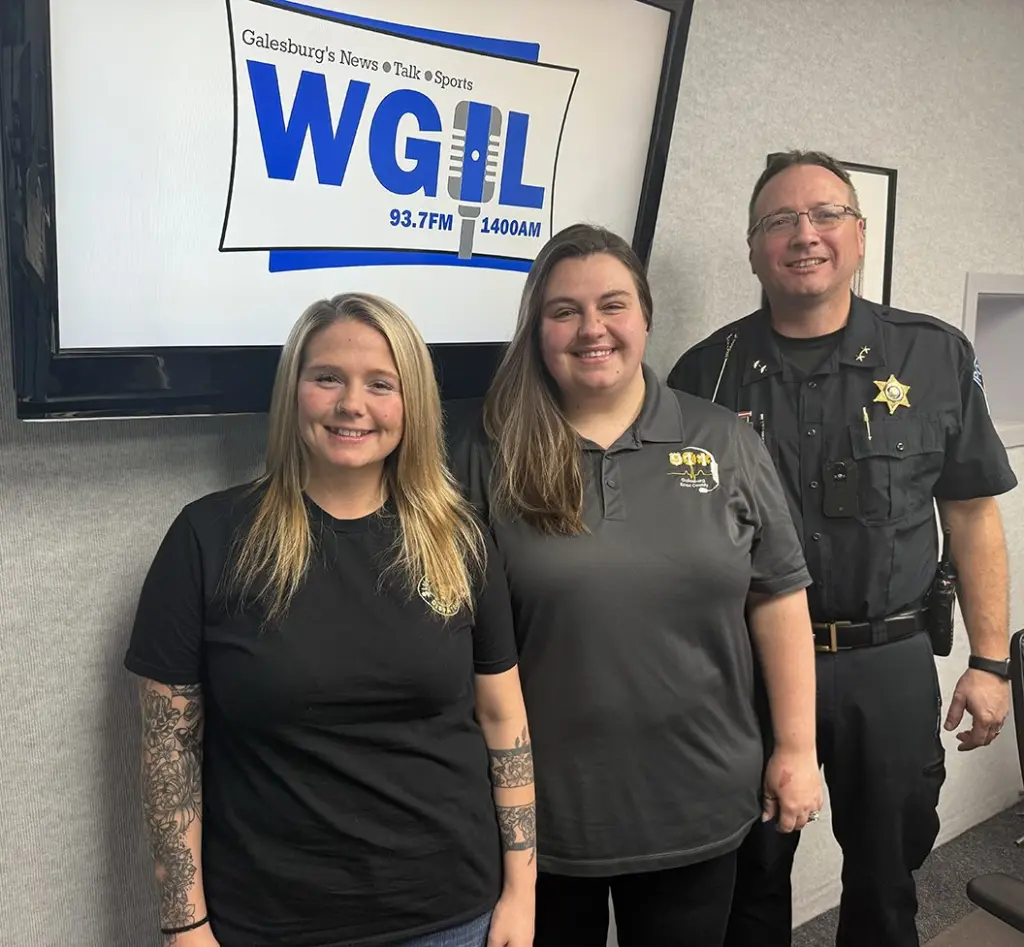
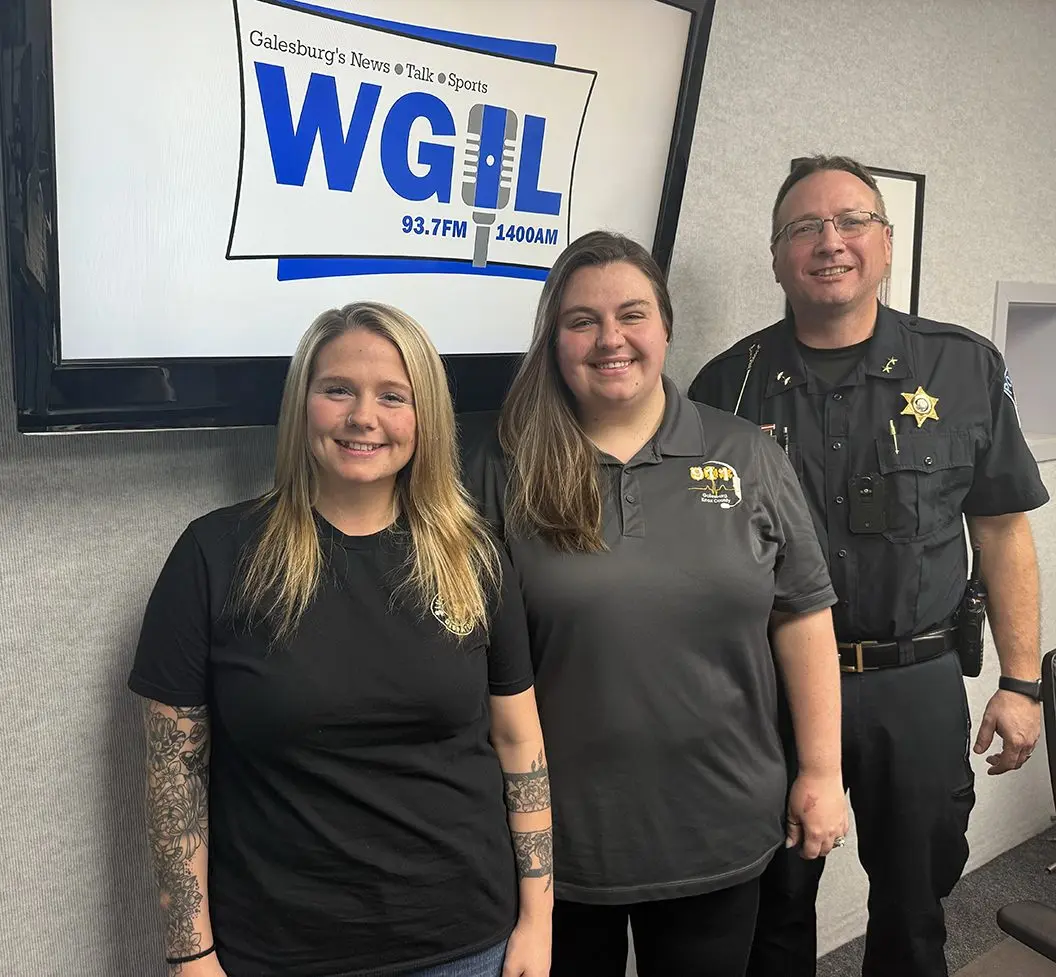
Ashley Aldridge, Samantha Swanson, and Chief Kevin Legate joined Galesburg’s Morning News on Friday, April 17. Listen to the full interview below.
Both Aldridge and Swanson have been dispatchers since 2017. Neither came from a law enforcement background — like many in the profession, they came from retail management. The job found them more than they found it.
“I had this fire inside of me that I didn’t know where I belonged,” Aldridge said. “But I knew I was meant to do something big and make a huge difference. I just didn’t know what it was.”
What the job actually looks like
The Galesburg/Knox County 9-1-1 Center operates around the clock on 12-hour shifts, with four to five dispatchers on at any given time. The center handles all emergency calls — police, fire, and medical — for both the City of Galesburg and all of Knox County, including rural volunteer fire departments.
At any moment, one dispatcher is managing city radio traffic while another handles county. On a busy day, a single incident on Interstate 74 can generate 50 calls at once.
“You never know what you’re walking into that day,” Swanson said. “It can start out the most boring of days, not much going on, and in an instant it can just pop off.”
Training takes approximately 16 weeks before a new dispatcher ever touches a live phone line.
The stress nobody sees
Chief Legate called dispatchers the backbone of the emergency response system, crediting them with initiating over 90% of all critical incident responses.
“They are first responders,” Legate said. “What they go through day in and day out, I cannot explain. You’d have to see them in action.”
The dispatchers described driving home from shifts in complete silence — minds still racing hours after the shift ended, adrenaline that won’t quit until 4 a.m.
One of the harder parts of the job: once first responders arrive on scene, the dispatcher’s technical role is finished. They rarely find out how the call ended.
“It’s been a really big adjustment,” Swanson said.
What the public gets wrong
One of the most common frustrations dispatchers face is the assumption that they always know exactly where a caller is located.
“Technology is amazing when it works,” Aldridge said. “It doesn’t always. So when we’re asking ‘Where are you?’ over and over — that’s why.”
Chief Legate also addressed the growing use of scanner apps, warning that partial information heard on a scanner can be misinterpreted and spread on social media — and that showing up at an active scene creates danger for everyone.
“If you see something on social media about a certain area, probably stay away,” Legate said. “That’s the best advice I can give.”
On when to call 911, Swanson kept it simple: if you’re asking whether you should call, call.
“It may turn out to be nothing,” Swanson said. “But that one time it will turn out to be something. We would never want anyone to feel like they could have done something and didn’t.”
The Galesburg/Knox County 9-1-1 Center has 20 dispatchers, 18 assigned to the dispatch room.